
Who is liable for a car accident in Tennessee? Usually, the person or business whose careless conduct caused the wreck is responsible. The answer can feel uncertain when drivers give different accounts or several vehicles are involved.
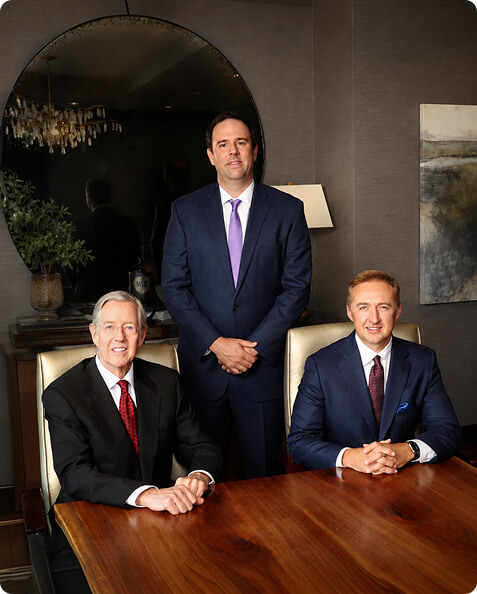
Wettermark Keith gives each client a dedicated team as a point of contact. That can make it easier to follow the investigation, insurance discussions, and next steps in your case.
A car accident lawyer in Tennessee can review the evidence, identify every possible source of liability, and explain how the law may affect your right to recover damages.
Why Fault Matters So Much in Tennessee
Tennessee puts the bill on whoever caused the wreck. That can mean medical costs, lost income, a totaled car, whatever you can actually prove. An insurer won’t just take your word for it, though; they need to see the evidence before they’ll admit their driver was the one at fault.
Fault disputes usually come down to one of three things, and it’s rarely obvious which one until the evidence is in.
- A Fault-Based Claim: The claim hinges on who did what right before impact. A citation can support the story, but it doesn’t settle liability on its own.
- The 50% Bar: Tennessee follows modified comparative fault. You generally cannot recover damages if you are found 50% or more at fault.
- Your Share of Fault: If you are less than 50% responsible, your recovery may be reduced by your percentage of fault. A finding of 20% fault would reduce the recoverable amount by 20%.
This is why a quick statement to an adjuster can have lasting consequences. A small detail may later be used to argue that you shared more blame than the evidence supports.
Your car accident lawyer from Wettermark Keith can answer your questions and explain what damages you can recover after a car accident.
The Four Elements Used to Prove Car Accident Liability
Whoever’s car took the bigger hit isn’t necessarily who’s on the hook for it. What decides a claim is the amount of negligence, and it has to trace back to something specific: careless driving that led to the crash, and a crash that led to losses actually sitting on paper somewhere.
The four basic elements are:
- Duty of Care: Every driver must use reasonable care, obey traffic rules, and watch for other people using the road.
- Breach of Duty: Speeding, following too closely, running a light, driving distracted, failing to yield- any of these can show a driver broke that duty.
- Causation: Insurers love pointing at an old injury or some later event- anything to argue the harm came from somewhere else.
- Damages: What’s actually owed, still sitting unpaid.
A police report alone rarely tells the whole story. Photographs, medical records, a witness’s account, whatever the vehicle logged- it’s usually the combination that ends up proving what happened.
Take a rear-end collision. The rear driver gets blamed by default for following too closely. That’s not always right, though. Brake lights that failed, a lane change nobody saw coming, another car braking hard up ahead and setting off a chain reaction- any of that can undercut the assumption.
Where the damage actually landed, and what someone standing on the sidewalk saw, tend to be what settles it either way.
Wettermark Keith can review the available evidence to help determine how the four elements of negligence may apply to your accident.
For a free legal consultation,
call (833) 588-9009 today
When Someone Other Than the Driver Owes You
A parent who knowingly lets an unfit child drive, a car owner who lends their vehicle, or another negligent party may share liability with the driver. Who owned the car, who was behind the wheel, why they had it that day- all of that decides who else is on the hook.
An employer may be responsible when an employee causes a wreck while performing job duties. A rideshare company, trucking business, maintenance provider, car manufacturer, or government entity could also enter the case. Each party may have different insurance and different evidence.
Government claims come with their own notice rules and defenses that don’t apply anywhere else, and a product claim can require inspecting the vehicle before it’s repaired or scrapped.
Naming the right party early matters for more than just getting the complaint right. Wait too long, and the proof that the party was holding onto can be gone before anyone gets to it.
Wettermark Keith can investigate the roles of other drivers, employers, vehicle owners, and businesses to determine whether additional parties may share liability for the crash.
What a Tennessee Car Accident Claim Is Actually Worth
Some of what you’re owed shows up on a bill right away. Other parts don’t, and that’s usually where the real fight happens. A serious spinal injury or a concussion rarely wraps up once the current bills are paid; it’s the treatment still coming, the work you can’t take on the same way anymore, that ends up mattering most.
This can cover:
- Medical Care: Everything from the ER visit to physical therapy down the road, plus whatever treatment is still ahead.
- Lost Income: Your pay stubs show what you’ve already missed, but if the injury sticks around, that number needs to account for the earning power you’ve lost going forward too.
- Property Damage: Repair estimates, a total-loss valuation, towing, a rental while your car’s in the shop- all of it counts.
- Pain and Suffering: This is harder to put a number on, but sleep that hasn’t gone back to normal, or just not being able to do the things you used to, still counts as harm.
- Punitive Damages: Most reckless behavior doesn’t trigger these. Courts save them for the rare case where the misconduct crosses into something worse than ordinary negligence.
Evidence gathering should begin early. You can request a crash report, while medical records and photographs may help connect your condition to the wreck. Avoid posting details about the crash or your recovery on social media while liability is disputed.
Fault being clear doesn’t guarantee you get paid what you’re owed. If the driver who caused the crash is uninsured, or carrying the state minimum on a wreck that costs way more than that, your own uninsured motorist coverage or collision policy may end up doing the heavy lifting instead.
Get Help Identifying Who Caused Your Tennessee Crash
An unresolved fault question holds up everything: treatment bills, repairs, the claim itself. A driver’s account doesn’t always hold up either, and sometimes there’s another person or business tangled up in it who hasn’t been named yet. Digging into that early tends to surface the gaps before negotiations even start, not after.
Wettermark Keith can examine who is liable for a car accident in Tennessee and explain the options that fit your circumstances. Our attorneys can also handle insurer communications while you focus on your medical care.
Contact a Tennessee car accident lawyer and ask for a review of your claim.
Call or text (833) 588-9009 or fill out our Free Case Evaluation Form to get started